Search engines are no longer just about ranking blue links. Today, they aim to deliver the best possible answer instantly.
This shift has made it essential to understand not just SEO, but also AEO.
In this guide, you’ll learn what SEO and AEO are, how they differ, why they important, and how to use them together to grow your website with sustainable, “free” organic traffic.
What Is SEO?
SEO (Search Engine Optimization) is the process of optimizing your website and content to rank higher in organic (non-paid) search engine results.
The primary goal of SEO is to attract free traffic to your site by making your pages more relevant, useful, and trustworthy in the eyes of search engines like Google.
SEO focuses heavily on:
- Creating high-quality content
- Optimizing keywords and search intent
- Improving site performance and usability
- Building authority through backlinks
When done correctly, SEO becomes a long-term asset that consistently brings in qualified visitors without ongoing ad spend.
Why Is SEO Important?
SEO is important because most online experiences begin with a search engine.
If your website doesn’t appear when people search for your products, services, or information, you’re invisible.
Key benefits of SEO include:
- Long-term, cost-effective traffic
- Increased brand credibility and trust
- Higher conversion rates from intent-driven users
- Sustainable growth compared to paid ads
Unlike paid advertising, SEO compounds over time. One well-optimized page can generate traffic for months or even years.
How Search Engines Work
Search engines are complex systems designed to help users find the most relevant and useful information on the internet in seconds.
To do this, they follow a structured process that determines which pages appear in search results and in what order.
At a high level, search engines work in three core stages: crawling, indexing, and ranking.
1. Crawling
Crawling is the process by which search engines discover new and updated web pages.
Search engines use automated programs called crawlers, spiders, or bots (for example, Googlebot) to scan the internet by following links from one page to another.
During crawling, search engines:
- Discover new pages
- Identify updated content
- Follow internal and external links
- Respect crawl directives such as robots.txt
Key Factors That Affect Crawling
- Internal linking structure: Well-linked pages are discovered faster
- Site architecture: Clear navigation helps bots crawl efficiently
- Robots.txt file: Controls which pages can or cannot be crawled
- Server performance: Slow servers reduce crawl efficiency
If a page cannot be crawled, it cannot rank.
2. Indexing
Once a page is crawled, it moves to the indexing stage.
Indexing is the process of analyzing, categorizing, and storing content in a massive database called a search index.
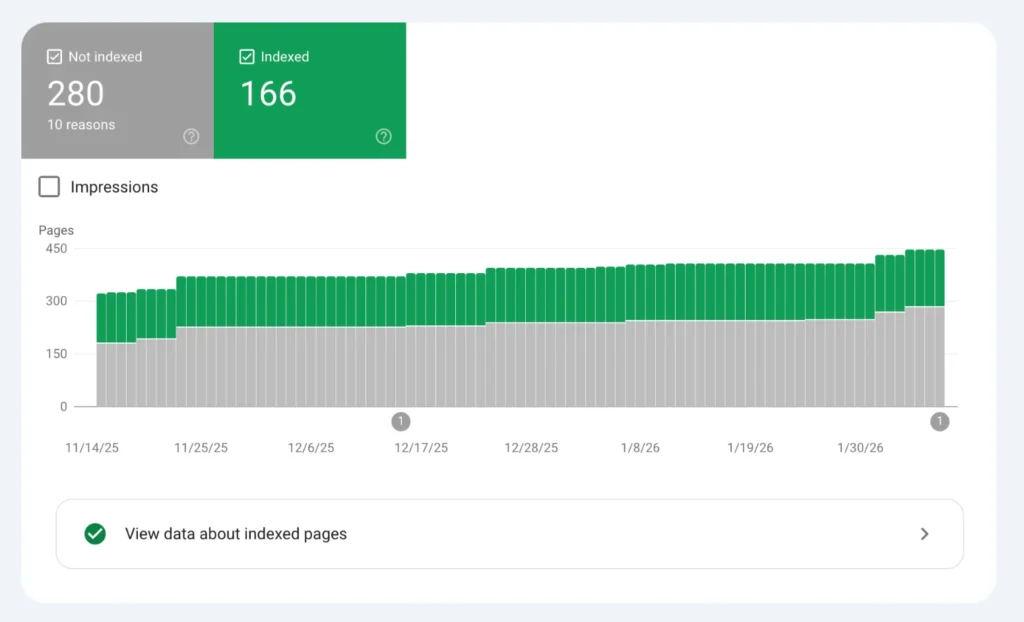
During indexing, search engines evaluate:
- Page content and topic relevance
- Keywords and semantic meaning
- Headings and content structure
- Images, videos, and alt text
- Structured data (schema markup)
Search engines do not store pages exactly as humans see them.
Instead, they break content down into entities, topics, and relationships to understand what the page is truly about.
Common Indexing Issues
- Duplicate content
- Thin or low-quality pages
- Incorrect canonical tags
- Noindex directives
If a page is not indexed, it will not appear in search results.
3. Ranking
Ranking is the stage where search engines decide which indexed pages appear first for a given search query.
Search engines use complex algorithms with hundreds of ranking factors to evaluate each page.
Key ranking signals include:
- Search intent alignment
- Content quality and depth
- Page experience (speed, mobile usability)
- Backlinks and domain authority
- Freshness and topical relevance
The goal is to match the best possible result to the user’s intent.
How Does Google Determine the “Best” Result?
Google’s mission is to provide the most helpful answer to every search query. To do this, it evaluates pages based on several core principles:
Search Intent
Google analyzes whether the query is:
- Informational
- Navigational
- Commercial
- Transactional
Pages that match intent outperform those that don’t, even if they’re well optimized.
Content Quality and Relevance
High-quality content:
- Fully answers the query
- Demonstrates expertise and trustworthiness
- Uses clear structure and formatting
- Provides value beyond surface-level information
This is why creating high-quality content remains critical for SEO success.
User Experience and Page Performance
Google favors pages that:
- Load quickly
- Are mobile-friendly
- Are easy to navigate
- Have minimal intrusive elements
A poor user experience can limit rankings even if the content is strong.
Authority and Trust Signals
Google uses backlinks as votes of confidence.
Authority is influenced by:
- Quality and relevance of backlinks
- Brand mentions
- Content credibility
- Overall domain reputation
Not all links are of equal relevance, and trust is crucial more than volume.
Modern Search: AI, AEO, and Answer Engines
Search engines are evolving into answer engines.
Today, they aim to:
- Display featured snippets
- Support voice search
- Power AI-generated responses
- Provide zero-click answers
This is where Answer Engine Optimization (AEO) becomes essential.
Content that is:
- Well-structured
- Clearly written
- Directly answers questions
- Supported by schema markup
has a higher chance of being selected as the “best” answer.
Types of SEO
SEO can be broken down into several categories, but at its core, there are three main types of SEO that every website needs to understand and implement:
- On-page SEO
- Technical SEO
- Off-page SEO
There are additional forms of SEO, such as local SEO, video SEO, and image SEO, but these usually fall under one of the three main categories above. Below, we’ll explore each core type in detail.
1. On-Page SEO
On-page SEO focuses on optimizing the content and elements on your website pages so search engines and users can easily understand what each page is about.
This includes creating relevant, in-depth, and helpful content that matches the search terms you want to rank for.
On-page SEO also covers things like internal linking, image optimization, and overall content structure.
Let’s start with one of the most important aspects: keyword usage.
Using Keywords in Your Content
Search engines scan your page to identify words and phrases known as keywords to understand the topic of your content.
When a specific keyword appears naturally in important areas of a page, it sends a clear signal to search engines about what that page is targeting.
However, using a keyword too often can backfire. Overusing keywords, also known as keyword stuffing, can lead to poor rankings or even penalties. The goal is balance.
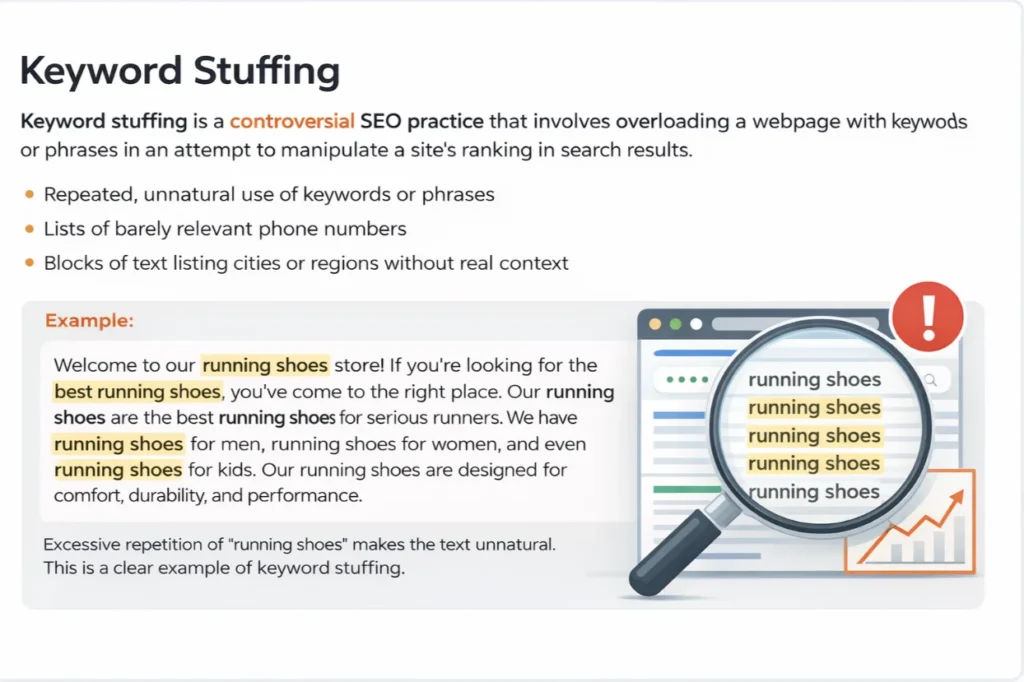
Best practices include:
- Using your primary keyword naturally within the content
- Including keyword variations and synonyms
- Writing for users first, not algorithms
Using related terms allows one page to rank for multiple relevant searches, not just one keyword.
Optimizing Key On-Page Elements
On-page SEO involves optimizing several important elements:
Title Tags
Your title tag tells search engines and users what your page is about. Including your main keyword in the title helps reinforce relevance and can improve rankings.
A clear, keyword-focused title also increases click-through rates from search results.
URLs
SEO-friendly URLs are short, descriptive, and easy to understand. While updating old URLs can sometimes cause issues, it’s best to create optimized URLs for new pages going forward.
If you ever change an existing URL, make sure to use a 301 redirect to preserve rankings.
Meta Descriptions
Meta descriptions don’t directly affect rankings, but they play a major role in whether users click on your result.
A strong meta description:
- Clearly explains what the page offers
- Encourages users to click
- Includes the main keyword where relevant
Image Optimization
Search engines can’t “see” images the same way humans do, so they rely on descriptive information.
To optimize images:
- Use clear, descriptive file names
- Add meaningful alt text that describes the image
- Use image titles where appropriate
Image optimization improves accessibility and can also help your pages appear in image search results.
Creating a Positive User Experience
Even perfectly optimized content won’t perform well if users have a poor experience.
Good on-page SEO supports usability by:
- Using short paragraphs and clear formatting
- Including helpful visuals
- Making navigation intuitive
- Ensuring content is easy to read on all devices
Search engines aim to reward pages that users find genuinely helpful and easy to use.
2. Technical SEO
Technical SEO focuses on ensuring that search engines can easily crawl, index, and understand your website.
If search engines struggle to access your pages, your content won’t rank no matter how good it is.
Website Structure and Internal Linking
As websites grow, structure becomes increasingly important.
A well-organized site:
- Groups content into logical categories
- Makes it easy for users to navigate
- Helps search engines discover all important pages
Internal linking also plays a key role. Linking to important pages using descriptive anchor text helps distribute authority and clarifies page topics.
Mobile Optimization
Search engines now use mobile-first indexing, meaning the mobile version of your site is the primary version evaluated for rankings.
To improve mobile performance:
- Use responsive design
- Avoid intrusive popups
- Ensure text is readable on small screens
- Make buttons and menus easy to tap
A mobile-friendly site improves both rankings and user satisfaction.
Page Speed and Performance
Slow-loading pages frustrate users and hurt SEO.
Page speed is a confirmed ranking factor, and tools like PageSpeed Insights can help identify performance issues such as:
- Large image files
- Unnecessary scripts
- Poor server response times
Improving page speed often requires technical fixes, but the SEO payoff is worth it.
Website Security (HTTPS)
Secure websites using HTTPS are trusted more by both users and search engines.
Browsers often warn users when a site isn’t secure, which can reduce traffic and credibility.
Moving to HTTPS is essential for modern SEO, but it must be done carefully to avoid broken links or duplicate URLs.
3. Off-Page SEO
Off-page SEO includes all optimization efforts that happen outside your website.
These strategies help build trust, authority, and reputation key factors search engines use when ranking pages.
Off-page SEO can include:
- Link building
- Digital PR
- Brand mentions
- Social visibility
- Local SEO signals
Among these, link building remains the most influential.
Building High-Quality Backlinks
Backlinks act as votes of confidence. Links from authoritative, trustworthy websites pass more value than links from low-quality sources.
However, quality is important far more than quantity.
A few strong backlinks from reputable sites can outperform dozens of weak links.
Relevance in Link Building
Links from websites related to your industry carry more weight than links from unrelated sites.
A natural backlink profile includes links from:
- Relevant blogs and publications
- Industry resources
- Trusted brands within related niches
Search engines look at context, not just authority.
Effective Link Building Strategies
Some proven beginner-friendly link-building approaches include:
Creating Linkable Assets
These are resources people naturally want to reference, such as:
- Original research or studies
- In-depth guides
- Free tools
- Visual resources
- Curated lists
Guest Posting (Done Right)
Guest posting can work when it’s:
- Relevant to the host site
- Value-driven, not promotional
- Used sparingly
- Focused on branding rather than keyword-heavy links
What Is AEO?
AEO (Answer Engine Optimization) focuses on optimizing content to provide direct, concise answers to user questions.
Instead of just ranking pages, AEO aims to:
- Appear in featured snippets
- Power voice search results
- Feed AI-driven search engines
- Deliver zero-click answers
What Does AEO Stand For?
AEO stands for Answer Engine Optimization.
As search engines evolve into answer engines, AEO ensures your content is structured so machines can easily extract and present it as the best answer.
What Is AEO in SEO?
AEO in SEO refers to the practice of optimizing content so it can be easily understood and selected by search engines as a direct answer to a user’s question.
Traditional SEO focuses on helping web pages rank higher in search results.
Answer Engine Optimization (AEO) builds on that foundation by structuring content in a way that allows search engines, voice assistants, and AI-powered tools to extract clear, concise answers.
In simple terms, SEO helps your page get found, while AEO helps your content get chosen as the answer.
How AEO Fits into SEO
AEO does not replace SEO. Instead, it works alongside it.
SEO ensures that:
- Your content is crawlable and indexable
- Your pages are relevant to search queries
- Your website has authority and trust
AEO enhances SEO by:
- Targeting question-based searches
- Optimizing for featured snippets
- Supporting voice search and AI results
- Improving visibility in zero-click searches
Without SEO, AEO has no visibility. Without AEO, SEO may miss modern search opportunities.
How AEO Is Applied Within SEO
AEO within SEO focuses on clarity, structure, and intent.
This includes:
- Writing direct answers to common questions
- Using clear headings and subheadings
- Adding FAQ sections to important pages
- Structuring content with lists and definitions
- Implementing schema markup where relevant
These techniques help search engines quickly understand what your content answers and when it should be shown.
Why AEO in Modern SEO?
Search behavior is changing. Users increasingly expect instant answers, not long lists of links.
AEO helps your content:
- Appear in featured snippets
- Power voice search responses
- Feed AI-generated summaries
- Gain visibility even without a click
As search engines evolve into answer engines, integrating AEO into your SEO strategy ensures your content remains competitive, discoverable, and authoritative.
SEO and AEO Work Best Together
The most effective search strategies combine both approaches.
SEO builds reach and rankings.
AEO improves precision and visibility.
Together, they help your content rank higher, stand out in search results, and deliver the exact answers users are looking for.
What Is the Difference Between AEO and SEO?
SEO focuses on ranking pages.
AEO focuses on answering questions.
SEO aims for clicks.
AEO aims for visibility and authority, even without a click.
AEO vs. SEO: Comparison Table
| Aspect | SEO | AEO |
| Primary goal | Rank web pages | Deliver direct answers |
| Target | Search engine results pages | Featured snippets & AI results |
| Content style | In-depth content | Concise, structured answers |
| Click dependency | High | Often zero-click |
| Best for | Long-term traffic growth | Voice & AI search visibility |
Keyword Research for SEO and AEO
Understanding Search Intent
Before choosing keywords, it’s important to understand why someone is searching.
Most searches fall into four intent categories:
- Informational – looking for answers or explanations
- Navigational – trying to find a specific site or page
- Commercial – researching products or services
- Transactional – ready to take action or make a purchase
SEO often targets broader topics and high-volume terms, while AEO focuses on specific, intent-driven questions.
Keyword Research for SEO
SEO keyword research aims to identify terms that:
- Have measurable search volume
- Match your content and business goals
- Are realistically competitive
- Support long-form, in-depth content
These keywords are typically:
- Short-tail or mid-tail phrases
- Topic-based rather than question-based
- Used throughout titles, headings, URLs, and content
SEO keywords help pages rank and attract consistent organic traffic over time.
Keyword Research for AEO
AEO keyword research focuses on how people ask questions.
These keywords often:
- Begin with who, what, when, where, why, or how
- Reflect natural, conversational language
- Appear in voice search and AI-driven results
- Trigger featured snippets or “People Also Ask” boxes
Instead of optimizing for volume alone, AEO prioritizes clarity, relevance, and answerability.
Tools for Finding SEO and AEO Keywords
Finding the right keywords for SEO and AEO requires a mix of research tools and search result analysis.
The goal is to uncover both high-value topics and question-based queries that reflect real user intent.
Different tools serve different purposes, so using them together produces the best results.
Keyword Research Tools
Traditional keyword research tools are ideal for identifying SEO-focused keywords. They help you discover:
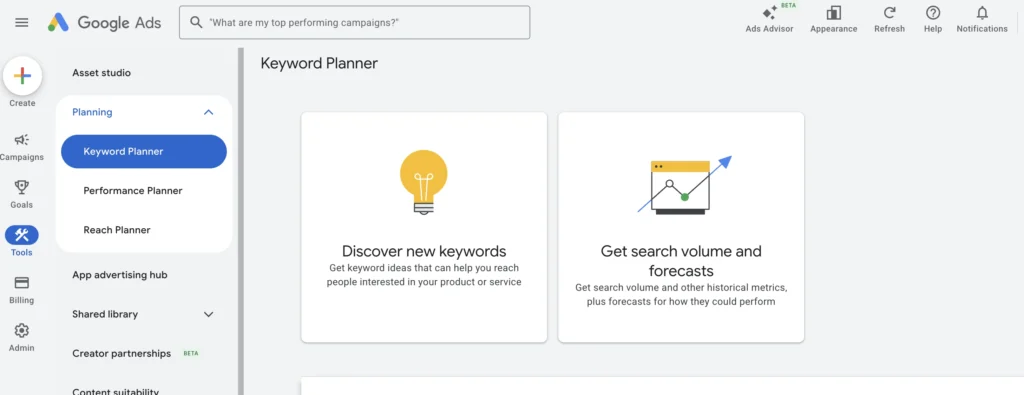
- Search volume and keyword demand
- Competition and difficulty levels
- Related keyword ideas and variations
- Topic clusters and content opportunities
These tools are especially useful for building long-form content and identifying primary keywords.
Search Engine Results Pages (SERP) Analysis
Search results themselves are one of the most valuable keyword research tools.
By analyzing SERPs, you can:
- Identify featured snippet opportunities
- Find “People Also Ask” questions
- Discover related searches at the bottom of the page
- Understand how Google interprets search intent
These insights are critical for AEO-focused keyword targeting.
Autocomplete and Related Searches
Search engine autocomplete suggestions reveal how users naturally phrase their queries.
Typing a partial query into a search bar can uncover:
- Conversational, long-tail keywords
- Common question formats
- Voice-search-friendly phrases
Related searches provide additional context and help expand keyword coverage.
Competitor Research Tools
Analyzing competitor websites can reveal keywords you may have overlooked.
Competitor research helps you:
- Identify ranking keywords
- Discover content gaps
- Find question-based queries competitors are answering
- Evaluate which pages perform best in search
This approach works well for both SEO and AEO planning.
How to Use These Tools Together
An effective keyword research process often looks like this:
- Use keyword tools to find core topics
- Analyze SERPs to identify question-based queries
- Review autocomplete and related searches for variations
- Validate ideas through competitor research
Combining these methods ensures your content targets both ranking potential and answer visibility.
Why Tool Selection Is Important
No single tool can capture every opportunity. Using multiple tools helps you:
- Avoid keyword blind spots
- Better match search intent
- Optimize for both traditional and AI-driven search results
- Create content that ranks and answers effectively
When used correctly, keyword research tools help bridge the gap between SEO and AEO, turning search demand into meaningful visibility.
How to Combine SEO and AEO Keyword Strategies
The most effective approach blends both.
Start by:
- Choosing a primary SEO keyword for each page
- Identifying related question-based AEO keywords
- Structuring content to answer those questions clearly
- Using headings, FAQs, and concise summaries
This allows one page to rank for traditional searches and appear as a direct answer in modern search experiences.
Organic vs. Paid Results
When you search for something on Google or another search engine, the results page usually displays organic results and paid results.
While they may appear similar, they work in very different ways.
Knowing the difference helps you decide where to focus your time and marketing budget.
What Are Organic Results?
Organic results are listings that appear naturally based on their relevance and quality not because a business paid for placement.
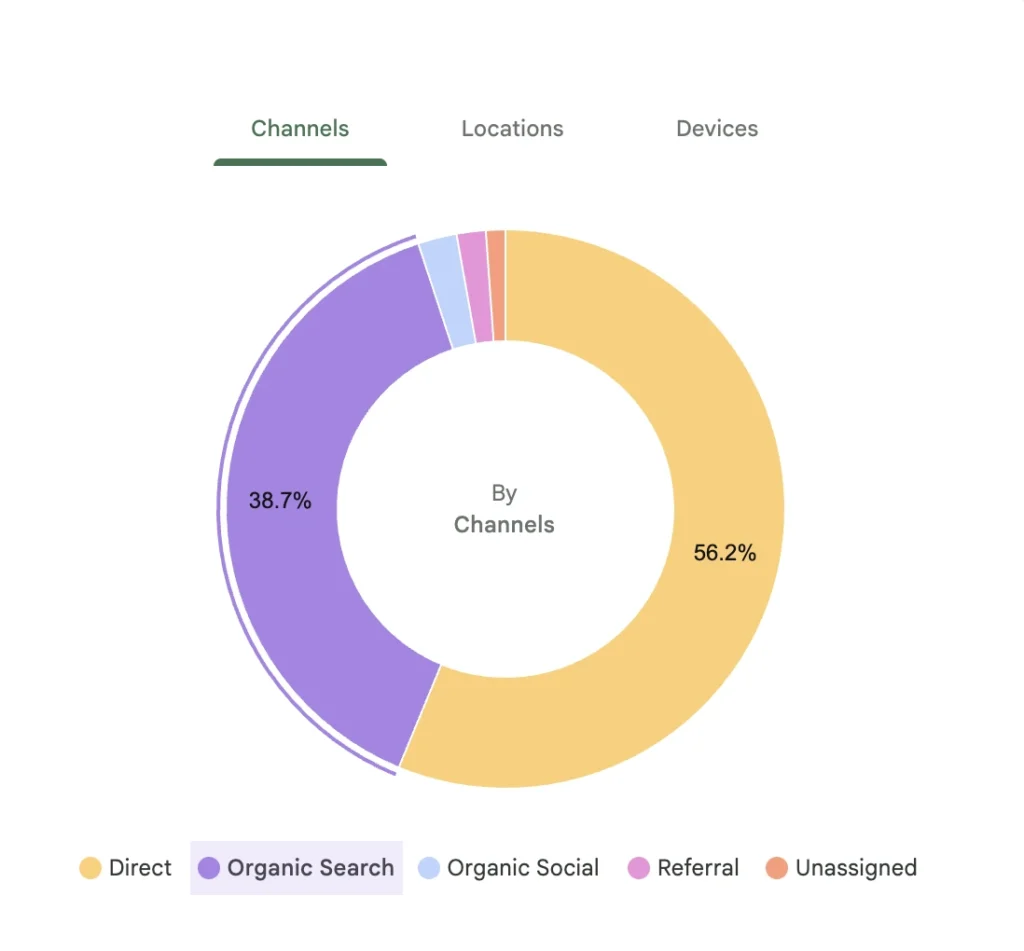
These results are earned through:
- Strong SEO practices
- High-quality, relevant content
- Technical optimization
- Authority and backlinks
Organic traffic is often described as “free” traffic because you don’t pay for each click. However, it requires consistent effort, strategy, and time to build.
The biggest advantage of organic results is longevity. A well-optimized page can continue to attract visitors long after it’s published.
What Are Paid Results?
Paid results appear at the top or bottom of search engine results pages and are labeled as ads.
These results are generated through platforms like Google Ads and work on a pay-per-click (PPC) model, meaning you pay each time someone clicks your ad.
Paid search allows you to:
- Gain instant visibility
- Target specific keywords and audiences
- Control budgets and campaigns
- Drive traffic quickly
However, once the ad budget runs out, traffic stops.
Key Differences Between Organic and Paid Results
- Organic results take time to build but provide long-term value
- Paid results deliver immediate traffic but require ongoing spend
- Organic listings tend to earn higher trust from users
- Paid results offer precise targeting and faster testing
Both approaches have strengths depending on your goals.
Organic vs. Paid: Which Should You Choose?
There’s no one-size-fits-all answer.
- Organic search is ideal for long-term growth and authority
- Paid search works well for quick wins, promotions, and testing
Many successful strategies use both leveraging paid ads for immediate visibility while building organic rankings for sustainable traffic.
SEO vs. SEM
SEM (Search Engine Marketing) includes both SEO and paid search advertising.
- SEO = organic, long-term strategy
- SEM = paid + organic visibility
- Best results come from using both strategically
| Aspect | SEO | SEM |
| Primary focus | Improving organic search visibility | Gaining paid visibility in search results |
| Traffic type | Organic (unpaid) traffic | Paid traffic (PPC ads) |
| Time to see results | Long-term; takes time to build | Immediate once campaigns go live |
| Cost structure | No cost per click, but requires time and resources | Pay per click or impression |
| Sustainability | Long-lasting results with ongoing optimization | Traffic stops when ad spend ends |
| Trust & credibility | Higher user trust in organic listings | Ads are clearly labeled as sponsored |
| Click behavior | Often higher engagement and intent | Useful for quick exposure and testing |
| Optimization focus | Content, keywords, backlinks, technical SEO | Bidding strategy, ad copy, targeting |
| Best use case | Building authority and steady growth | Promotions, launches, and fast results |
| Role in strategy | Long-term foundation | Short-term acceleration |
How to Use SEO and SEM Together
SEO and SEM work best when used side by side:
- Use SEM to test keywords and messaging quickly
- Use SEO to build lasting visibility and authority
- Combine both to dominate search results for important terms
This balanced approach helps you capture traffic now while investing in sustainable growth.
Creating High-Quality Content for SEO and AEO
High-quality content is the foundation of both SEO and AEO. The goal remains the same: to deliver the most helpful, relevant answer to users.
Creating content that performs well today means writing for people first, while structuring that content in a way search engines can easily understand and extract value from.
Start With Search Intent
Before writing, it’s essential to understand why someone is searching.
High-quality content aligns with the user’s intent, whether they are:
- Looking for information
- Comparing options
- Solving a problem
- Preparing to take action
SEO content often targets broader topics, while AEO content focuses on directly answering specific questions. The best content does both.
Write Clear, Helpful, and In-Depth Content
For SEO, content should be thorough, well-researched, and cover a topic in depth. This helps search engines view your page as a reliable resource.
For AEO, clarity matters just as much as depth. Answers should be:
- Direct and easy to understand
- Placed near the top of the page when possible
- Written in simple, conversational language
Avoid unnecessary filler. Every section should add value.
Structure Content for Readability and Answers
Well-structured content benefits both users and search engines.
Best practices include:
- Using descriptive headings and subheadings
- Breaking content into short paragraphs
- Including bullet points and numbered lists
- Highlighting definitions and summaries
This structure improves readability and increases the chances of your content appearing in featured snippets or AI-generated responses.
Optimize for Both Keywords and Questions
High-quality content balances traditional SEO keywords with AEO-style questions.
This means:
- Including primary and secondary keywords naturally
- Using question-based headings (who, what, how, why)
- Adding FAQ sections where appropriate
- Answering each question clearly and concisely
This approach allows one piece of content to rank broadly while also serving as a direct answer.
Use Supporting Elements to Enhance Value
Visuals and supporting elements help users understand content faster.
Enhance content with:
- Relevant images and diagrams
- Optimized image alt text
- Examples and real-world context
- Internal links to related content
These elements improve engagement and signal quality to search engines.
Keep Content Fresh and Accurate
Search engines favor content that stays relevant.
To maintain quality:
- Update outdated information
- Expand sections as search intent evolves
- Improve clarity based on user behavior
- Refresh examples and data
Regular updates strengthen both SEO performance and AEO visibility.
Final Thoughts: What Is Seo And Aeo
Search is no longer just about ranking links; it’s about delivering the right answer at the right moment.
As search engines evolve, SEO and AEO are no longer separate strategies but complementary parts of a single, modern approach to visibility.
SEO provides the foundation. It helps your content get discovered, indexed, and trusted by search engines over time.
AEO builds on that foundation by structuring content so it can be selected as a direct answer for featured snippets, voice search, and AI-driven results.
When used together, SEO and AEO allow your content to:
- Rank consistently in organic search
- Appear in answer boxes and zero-click results
- Reach users across traditional, voice, and AI search experiences
- Build authority without relying solely on paid traffic
Rather than choosing between SEO or AEO, the most effective strategy is to integrate both.
Create content that is comprehensive yet clear, detailed yet direct, and optimized not just to rank but to answer.
In today’s search landscape, the brands that win are the ones that understand this balance and use SEO and AEO together to stay visible, relevant, and trusted.