You stare at your restaurant’s empty tables on a Friday night. The aroma of your famous bobotie fills the air, but the chairs stay cold.
In South Africa, where food spots pop up like braais at a rugby match, standing out feels tough.
High rents in Sandton or delivery fees from Mr D eat into your profits.
What if you could change that?
Restaurant digital marketing offers a way out. It uses online tools to pull in locals searching for “best bunny chow Durban.”
No need for fancy agencies, just smart steps to get eyes on your menu.
This guide shows you how. You’ll learn easy actions to build your online spot, grab attention on social feeds, and turn clicks into cash.
Expect real tips for SA eateries, plus tools that fit tight budgets.
Here’s what we’ll cover:
- Why go digital now, with local twists.
- Five clear steps to launch your plan.
- Free and cheap tools to make it simple.
- Stories from SA spots that nailed it.
- Fixes for common slip-ups.
- Quick answers to your top questions.
Ready to pack your place? Let’s get started.
Why Restaurant Digital Marketing Is Important in South Africa

Think about your last meal out. Did you scroll Instagram for pics or Google “pizza near me Rosebank”?
Stats show 70% of South Africans do the same before eating out. Without a strong online game, your spot stays hidden.
Restaurant digital marketing fixes that. It builds your web presence to match what hungry folks seek.
In SA, where mobile use tops 90%, it means more walk-ins from township searches or Cape Town tourists.
Local Trends Shaping Your Online Push
Digital boosts for food spots grow fast here. TikTok videos of sizzling peri-peri chicken rack up views.
Post-lockdown, online orders jumped 50% via apps. Ignore this, and chains like Spur scoop your crowd.
But you can win. Start with free listings to show up in “eatery deals Joburg.” Your goal? Turn scrolls into seats.
Quick check: What’s holding your restaurant back online? Low reviews? No photos? Jot it down, we’ll tackle it soon.
This shift isn’t just hype. It cuts waste on flyers and targets real fans. For small owners, it’s a lifeline to steady sales.
Related: How To Build A Website For Business in South Africa
Core Steps to Build Your Restaurant Digital Marketing Plan
You don’t need a degree in tech. These steps guide you from zero to buzzing online. Follow them one by one. Each builds on the last for smooth growth.
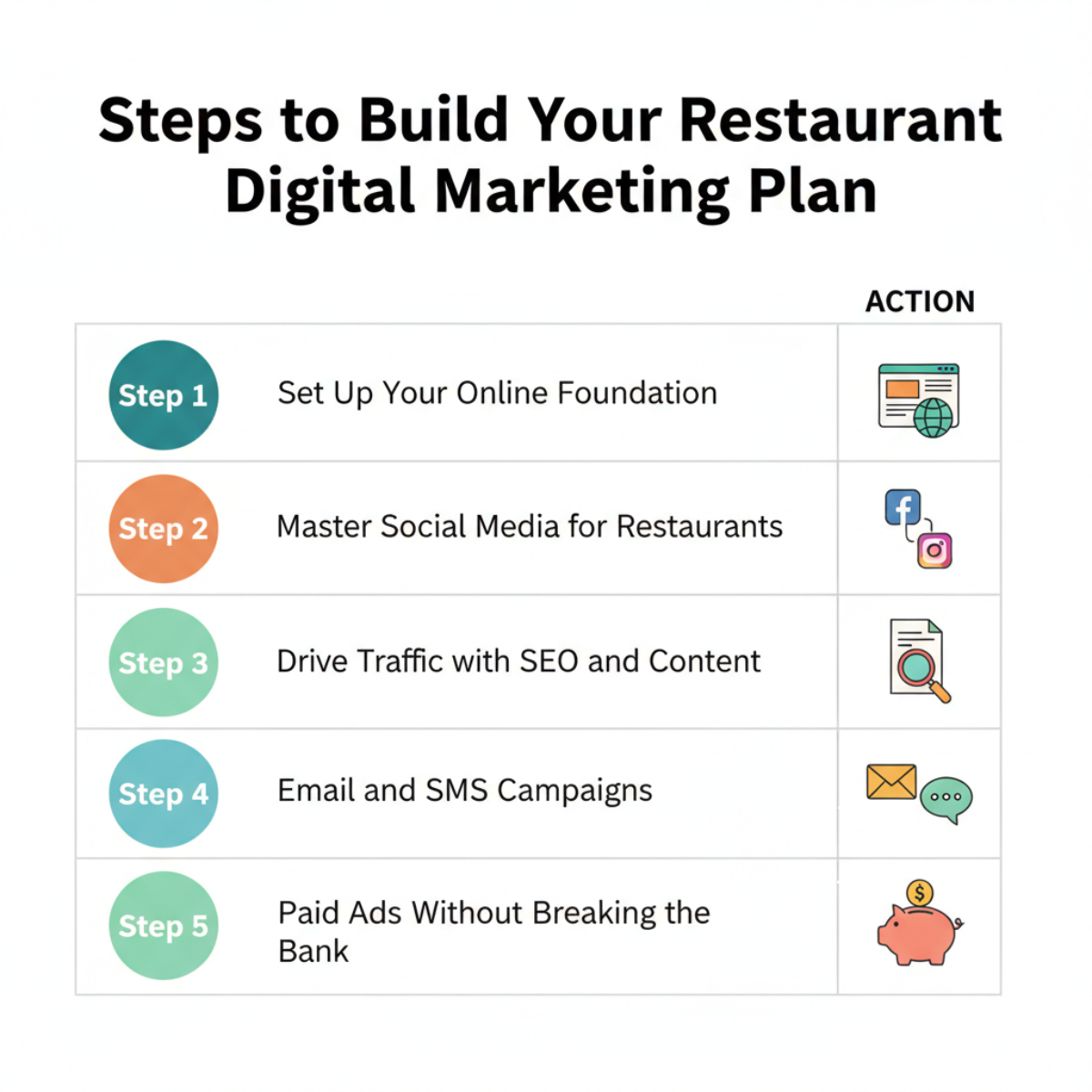
Step 1 – Set Up Your Online Foundation
First, claim your digital home. Without it, promo efforts flop.
Start with Google My Business. It’s free and puts you on maps.
Add your address, hours, and mouthwatering pics of your vetkoek. Locals hunting “braai spots Pretoria” will spot you first.
Next, get a basic website. Use WordPress, it’s like building with blocks. Show your menu, story, and booking form. No coding needed; templates handle it.
Here’s a quick checklist to nail this:
- Upload 10+ clear photos (food close-ups shine).
- List menu prices and specials.
- Add contact via WhatsApp—SA’s go-to chat.
- Test on mobile; 80% check phones at tables.
Do this, and your base stands strong. It feeds every other tactic.
Step 2 – Master Social Media for Restaurants
Social feeds are your free billboard. Post daily to hook followers.
Pick platforms that fit. Instagram suits visual eats like sushi rolls. Facebook works for family spots sharing deals.
TikTok? Short clips of chefs flipping pancakes draw Gen Z crowds.
Content keeps it fun. Share user tags of happy diners. Run polls: “Pap or sadza tonight?” Answer comments fast to build trust.
Zero in on what works: How can a restaurant use social media? Post user stories, flash sales, and live sessions from your kitchen.
Aim for three posts a week. Tools schedule them so you focus on cooking.
Watch engagement soar. One Joburg cafe gained 200 followers weekly this way. Your turn: Snap a story today.
Step 3 – Drive Traffic with SEO and Content
Search engines love helpful info. Restaurant search engine tips start with keywords like “best shisa nyama Soweto.”
Make a blog corner on your site. Write short posts: “Top 5 Vegan Picks in Your City.” It pulls readers via Google.
Add local flavor. Target “halal eateries Cape Town” if that fits you. Use free tools like Google Keyword Planner for ideas.
Semantic swaps help: Mix “online promo for eateries” with “food biz web growth.” Google sees the full picture.
Result? Top spots in results mean steady traffic. No ads needed yet.
Step 4 – Email and SMS Campaigns
Direct lines beat broadcasts. Collect emails at checkout: “Sign up for weekly specials?”
Send blasts with Mailchimp. Free for small lists. Share flash deals: “20% off bobotie today.”
How to do email marketing for restaurants? Keep it short. One image, clear call: “Book now.” Add SMS for urgency—SA loves quick texts.
Build lists slow. Offer a free coffee for sign-ups. Track opens to see what clicks.
This step turns one-time guests into regulars. Expect 15% more repeats.
Step 5 – Paid Ads Without Breaking the Bank
Ready to amplify? Facebook Ads target “food lovers in Polokwane.” Start small: R200 tests a post.
Google Ads catch “dinner near me” searches. Set budgets to avoid shocks.
Track wins: Use UTM links to see which bring bookings. Tweak based on data.
| Free Step | Paid Boost | Expected Gain |
| Social posts | FB targeted ads | +30% reach |
| Google listing | Search ads | +20% calls |
| Email signup | SMS promo | +15% orders |
Scale what works. This closes the loop on your plan.
Read also: How To Do Digital Marketing For Small Business
Top Tools for Restaurant Digital Marketing
Tools make work light. Pick ones that fit SA wallets, many have free starts.
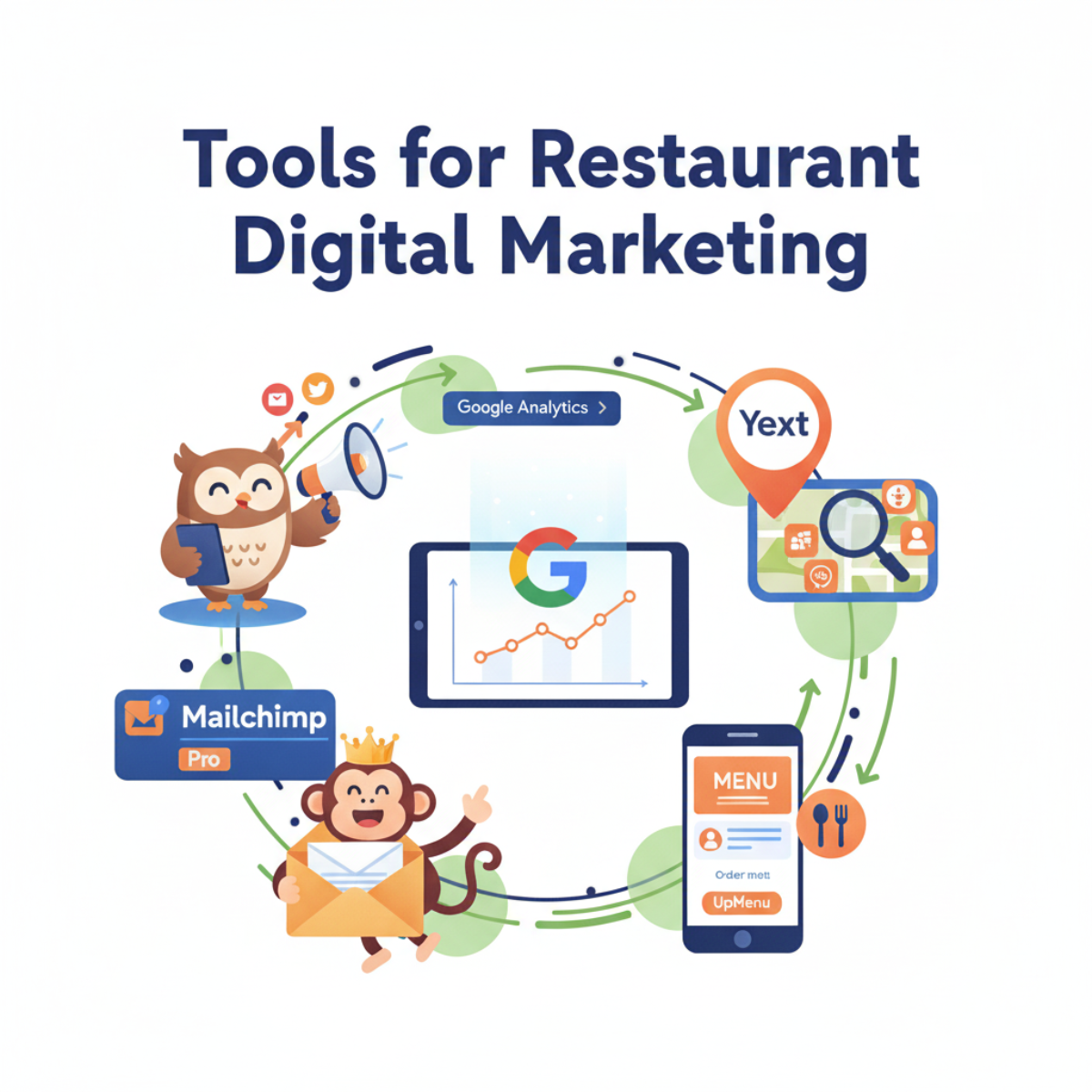
Free Tools to Kick Off
Canva designs eye-candy menus. Drag, drop, done. No designer fees.
Hootsuite plans posts across apps. Queue a week’s worth in 30 minutes.
Google Analytics tracks visitors. See if “restaurant web strategies” draws crowds.
These build habits without cost.
Paid Picks (Under R1000/Month)
UpMenu adds online ordering. Customers pay via card or EFT—seamless for SA.
Yext syncs listings across sites. One update rules Yelp, TripAdvisor, all.
What are digital marketing tools for restaurants? These top the list for ease.
| Tool | Cost (R/month) | Best For |
| UpMenu | 500 | Orders |
| Yext | 800 | Listings |
| Mailchimp Pro | 300 | Emails |
One Durban spot used Canva to double shares. Yours next?
Common Mistakes and How to Fix Them
Everyone slips. Spot these to stay ahead.
Posting without plans wastes time. Fix: Batch content Sundays.
Spammy emails chase folks away. Fix: Personalize with names, limit to bi-weekly.
Ignoring reviews hurts trust. Fix: Reply to all, thank positives, solve negatives fast.
Avoiding online promo fails for eateries starts here. Check monthly—what’s not working? Pivot quick.
FAQs – Quick Answers to Top Questions
What is the best marketing strategy for a restaurant?
Mix social shares with local SEO. Post fun content, claim your Google spot, and run cheap ads. It pulls steady crowds without overload.
How can a restaurant use digital marketing?
Build a site, post on Insta, email deals, and track with free tools. Start small—focus on one channel to see quick wins.
What are digital marketing tools for restaurants?
Canva for designs, Mailchimp for emails, Google My Business for maps. All fit tight budgets and boost visibility fast.
How do restaurants do social media marketing?
Share real moments: Chef tips, customer pics, quick polls. Engage daily to turn likes into loyal diners.
Related: Top 10 Digital Marketing Agencies in the World (2025 Update)
Conclusion
You’ve got the map now. Restaurant digital marketing turns quiet nights into full houses. Pick one step—maybe that Google claim—and run with it.
For more SA business smarts, check our guide on starting an online store in South Africa.
Your tables await. What’s your first move?